
Summer Outdoors
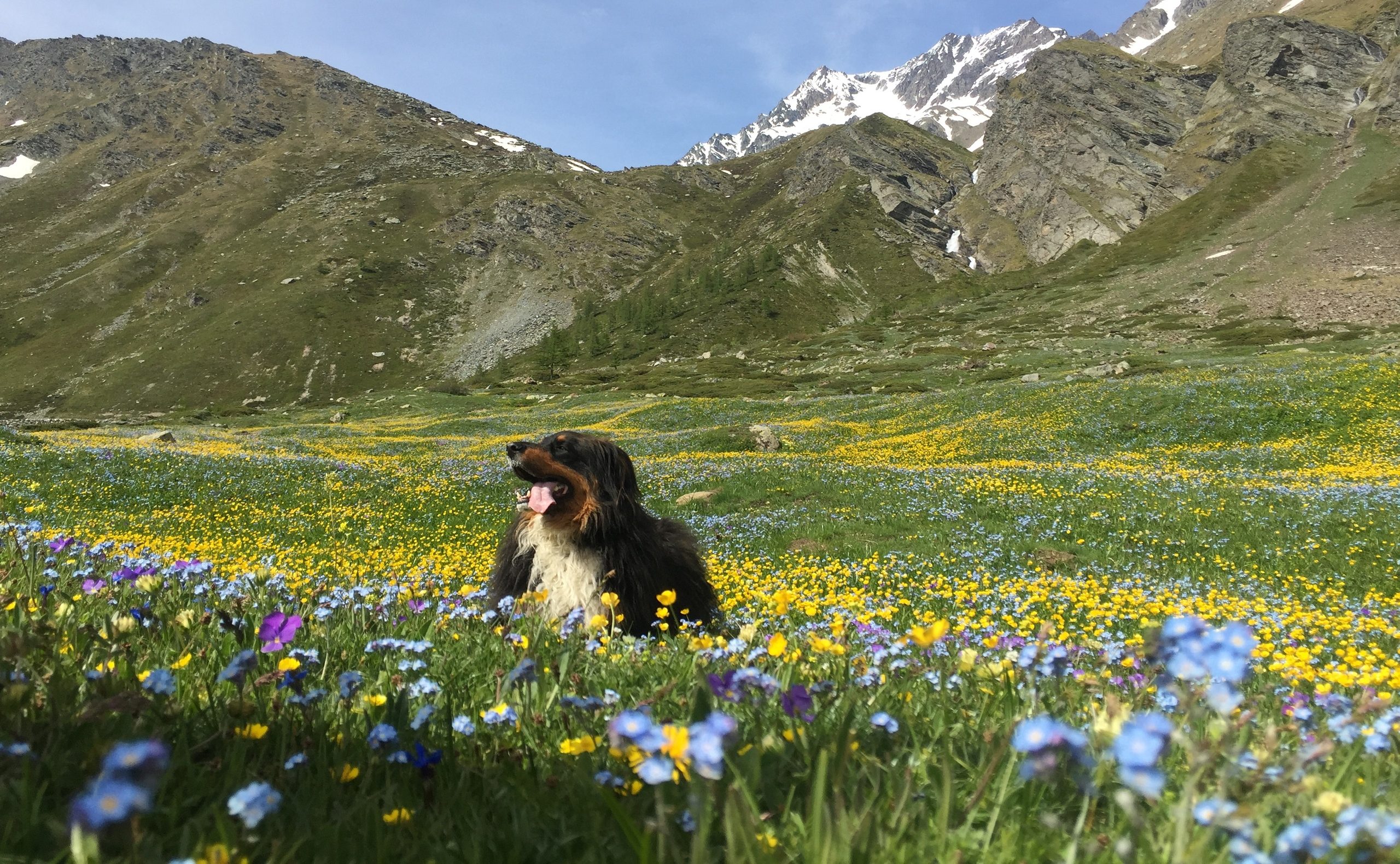
Coniferous forests, alpine pastures, fresh air, and historic trails: in the summer, the Upper Valley offers routes for hikers and cyclists, ancient villages to explore, and local traditions to discover at your own pace.
A journey on foot through two thousand years of travel: historic mule trails, medieval architecture, and the footsteps of pilgrims who connected northern and southern Europe.
The Great St. Bernard Pass, at an elevation of 2,473 meters, has played a fundamental role in relations between northern and southern Europe since ancient times. Roman legions, barbarian tribes, the Saracens, the emperors of the Holy Roman Empire, the popes, the Crusaders, and Napoleon Bonaparte with his army have all passed through the Pass. As early as prehistoric times, right on the Pass—called Summus Pœninus by the Romans—the Roman road, a mansio, and a temple can be identified; then, around 1050, Saint Bernard of Aosta founded a hospice there to assist pilgrims and travelers.
Today, the pass has been replaced in its role as a transalpine route by the Great St. Bernard Tunnel, which, at 6 km long, connects the Valais to the Aosta Valley. Excavation began on the Italian side in 1958, and on March 19, 1964, the first road tunnel open to traffic through the Alps was inaugurated.
The Pass remains a tourist attraction and an alternative route from June through October, when it is open to traffic.
This route also served as a European
route, as it connected the financial centers of the Po Valley and Tuscany to the merchant cities of Champagne and Flanders. For this reason, the route was always kept in good condition, allowing soldiers, goods, and travelers to pass through over the centuries.
The first description of the route dates back to the 10th century, when Archbishop Sigeric, traveling from Canterbury to Rome in 990 A.D., described the 79 stops along his journey on the way back.
Before and after him, armies, Savoy kings, and even Napoleon’s mighty army also marched along it; the latter passed through in May 1800, during his Italian Campaign.
Through mountain trails, dirt roads, and ancient villages, the Via Francigena is a route suitable for everyone, retracing the historic path of pilgrims who—from northern Europe, setting out from Canterbury—traveled to Rome to visit the tomb of St. Peter and then on to the port of Brindisi, where they embarked for the Holy Land.
The Aosta Valley lies halfway along this route and can be traversed in 5 stages of about 20 km per day, with stops at lodging facilities along the way.
In the Aosta Valley section, the first leg begins at the Great St. Bernard Pass at an elevation of 2,450 meters, then continues through Saint-Rhémy-en-Bosses and Saint-Oyen, ending in Étroubles, where the first stop is scheduled before continuing on to Aosta.
Step by step, let yourself be enchanted by the magnificent landscapes along the way: majestic mountains, ancient villages with cobblestone streets and historic monuments, fountains from which pure spring water flows … You can download maps and information for all the routes from the website ofthe European Association of the Via Francigena.
Due to the rugged terrain and high altitude along the Aosta Valley section of the route, several hostels were built to provide rest and refreshment for the many travelers.
The Great St. Bernard Hospice was the oldest and most famous. Located on the Great St. Bernard Pass, it is still home today to the canons of Mont-Joux, who for centuries have provided “bed, bread, and fire” to millions of travelers.
On their way down to Aosta, the pilgrims also passedthe Fonteintes Hospital, founded around 1250 by the lords of Bosses; the Saint-Rhémy hospice, where Archbishop Sigeric stayed; and the famous fortified house of Château Verdun in Saint-Oyen.
Étroubles also had its own hospice, which remained in operation until the 18th century. The house of Abbé Veysendaz was later built on the site where the hospice once stood; Napoleon spent the night of May 20, 1800, there.
Coniferous forests, alpine pastures, fresh air, and historic trails: in the summer, the Upper Valley offers routes for hikers and cyclists, ancient villages to explore, and local traditions to discover at your own pace.