Coumba Freida Carnival
An Alpine tradition where the memory of Napoleon’s passage meets the ancient rituals to ward off the end of winter.
Topics
-
Historic Village
History and Origins
The Coumba Freida Carnival (the “cold valley,” as the Great St. Bernard Valley has historically been called) is one of the most authentic traditional festivals in the Alps. Its origins intertwine the satirical portrayal of Napoleon Bonaparte’s troops passing through in May 1800 with the most ancient agricultural rites celebrating the awakening of spring and the banishment of winter spirits.
The Landzetta and Handcrafted Costumes
The symbolic figure of the carnival is the Landzetta:
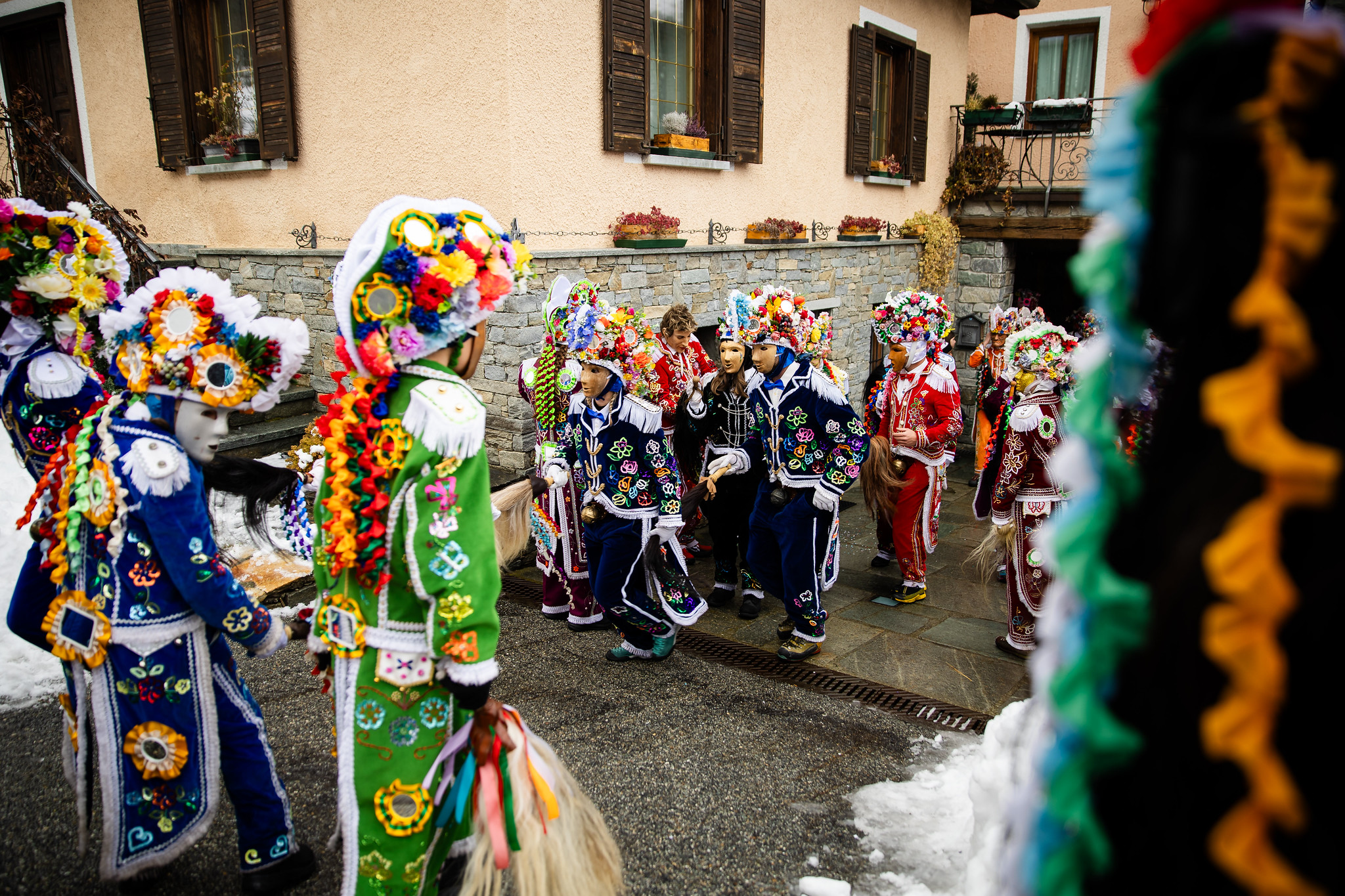
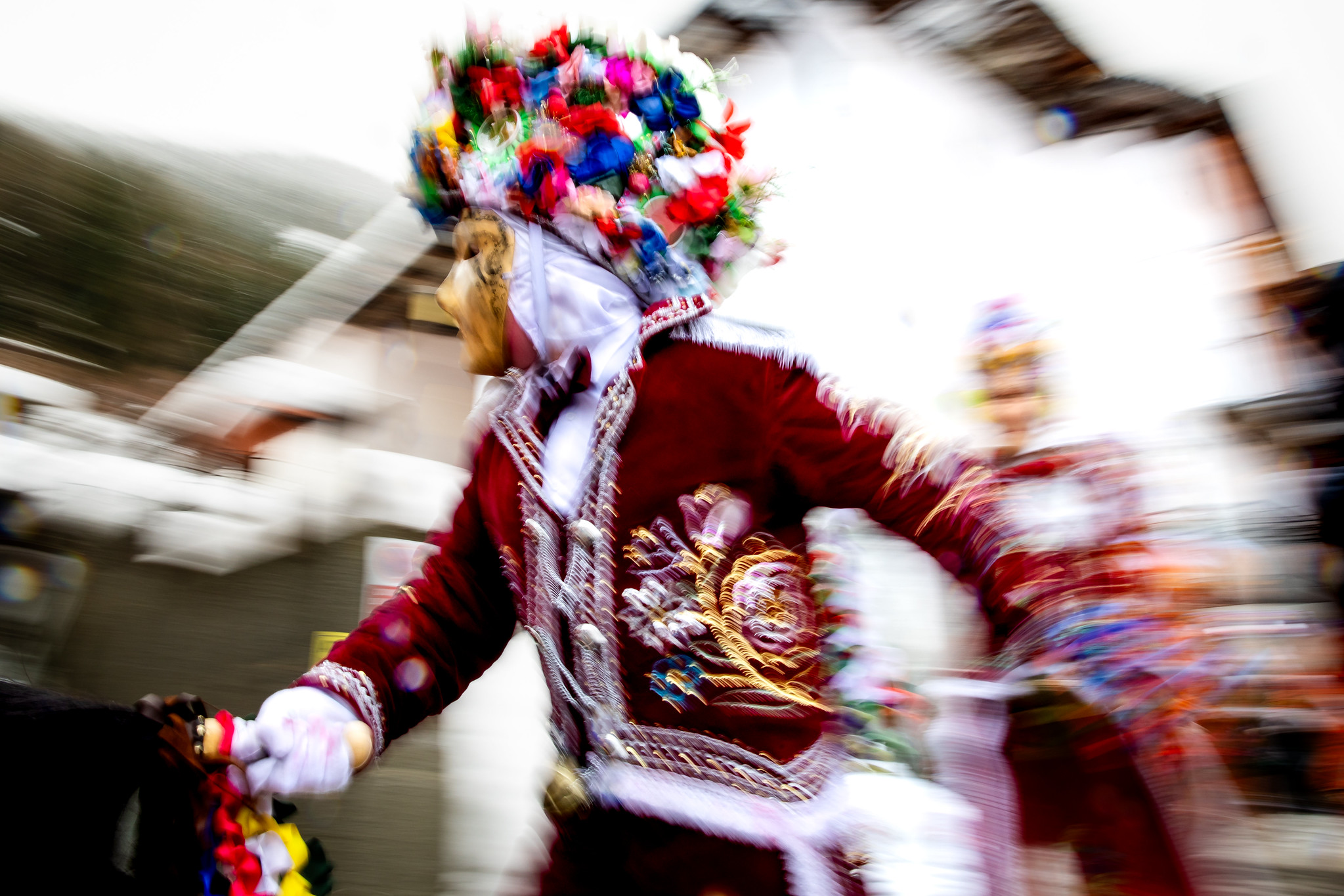
- The costume: inspired by the French military uniforms of Napoleon’s army, it is made entirely of velvet and hand-embroidered with beads, mirrors, and approximately 30,000 sequins, which reflect light to ward off negative forces
- The bells and the horse’s tail: The performers wear a belt (tsambis) around their waists fitted with large copper bells, while in their hands they hold a staff topped with a horse’s tail. They use it to touch spectators and impart vigor and fertility to them
- The face: It is covered by a rigid mask (historically made of bark or wood) to maintain anonymity throughout the entire parade.
The Mascarada and the Procession
The procession follows a precise order: it is led by the Guide carrying the flag, followed by the Devil, the Harlequins, the Tugur (the old man), and the group of Landzette, accompanied by musicians playing accordions and drums.
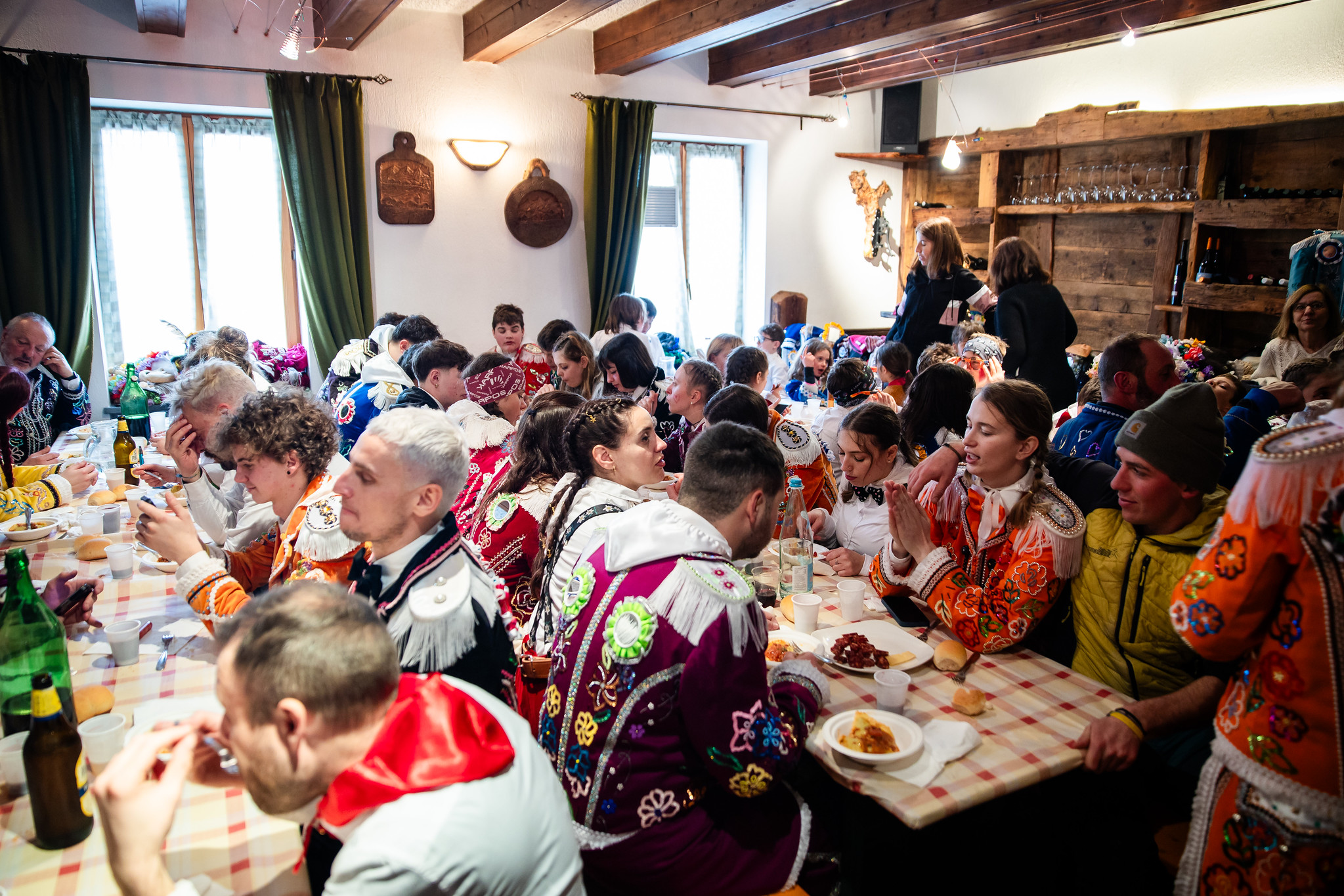
The processions make their way on foot through the villages of Étroubles, Saint-Oyen, and Saint-Rhémy-en-Bosses according to a traditional schedule, stopping at homes to enjoy the hospitality of local families, who offer cheese, cured meats, and traditional sweets.
Image Gallery