
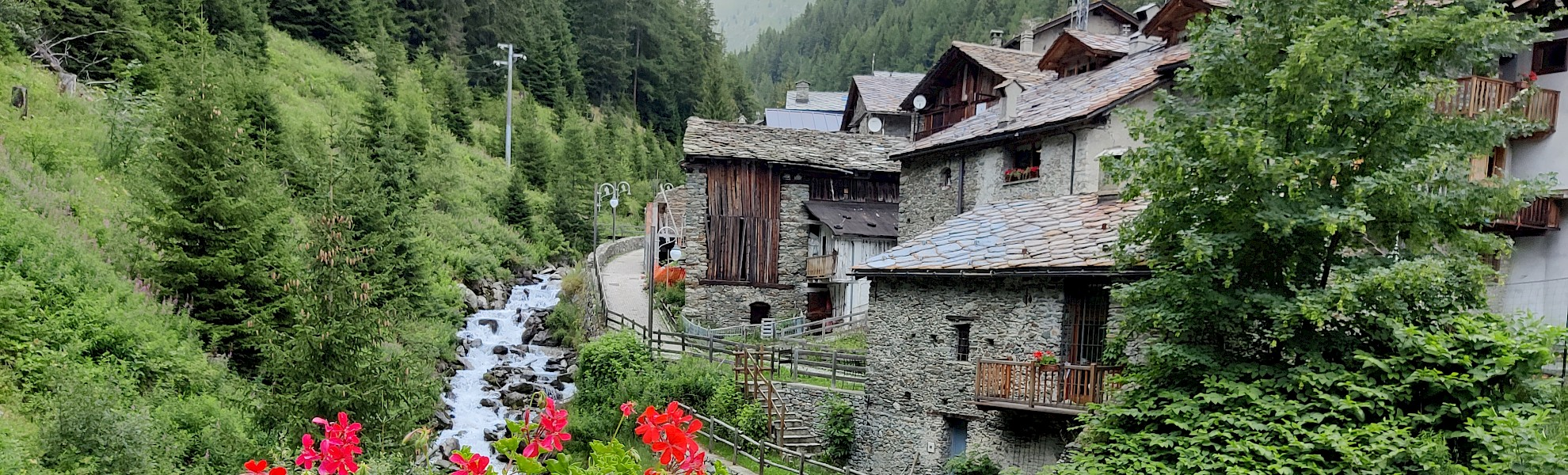
Saint-Rhémy-en-Bosses
At 1,632 meters, the last village before the pass: the story of the Marronniers and the Soldats de la neige, the medieval Castle, the Jambon de Bosses DOP, and skiing at Crévacol.
The Savoyard fiefdom of the 11th century, the first Alpine guides, and the passage of Napoleon’s army in 1800
The history of Saint-Rhémy-en-Bosses is marked by the vital role its inhabitants played in ensuring safe passage through the Great St. Bernard Pass:
In the Middle Ages, under the Counts of Savoy, the community was granted the exclusive right to accompany travelers and goods from Aosta to the pass. This gave rise to the “marronniers”—figures that were a cross between mountain guides and porters—who were able to find their way through blizzards and blaze a trail through fresh snow.
To keep the road open during the winter months, the residents were exempted from mandatory military service on the condition that they form the Soldats de la neige: a local militia dedicated to clearing the road and rescuing travelers caught in avalanches or exhausted by the cold.
In May 1800, some 40,000 soldiers of the Reserve Army, led by Napoleon Bonaparte, descended from the hill toward the Po Valley. The event left a deep impression on the valley: it is precisely from the uniforms of that army that the costumes of the Landzette in the Coumba Freida Historical Carnival derive their origins.
At 1,632 meters, the last village before the pass: the story of the Marronniers and the Soldats de la neige, the medieval Castle, the Jambon de Bosses DOP, and skiing at Crévacol.
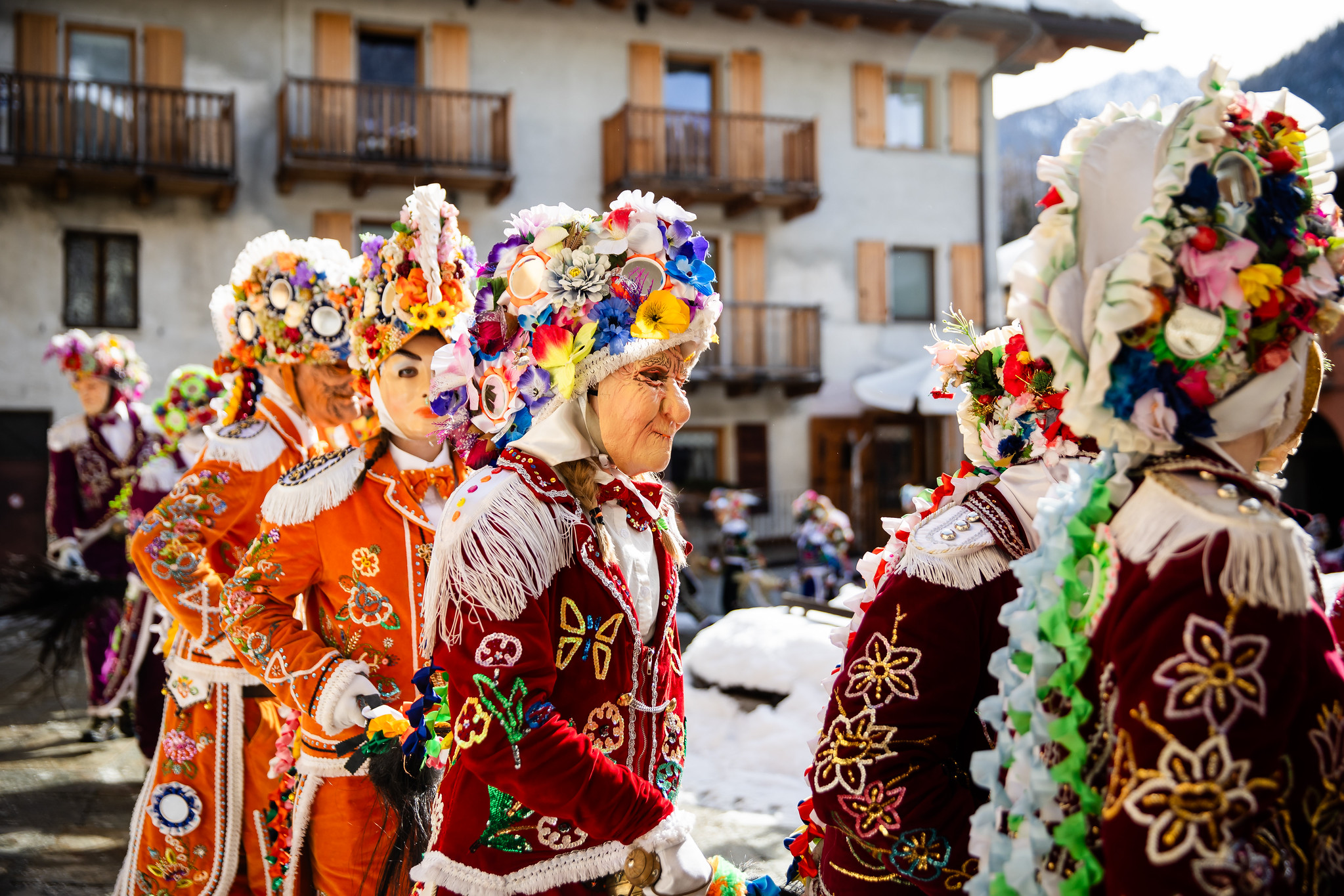
An Alpine tradition where the memory of Napoleon’s passage meets the ancient rituals to ward off the end of winter.